Materials
Choosing the Right Timber for a Room

Written by
Daniel Okafor
Interior Designer
Published
Read Time
5 min read
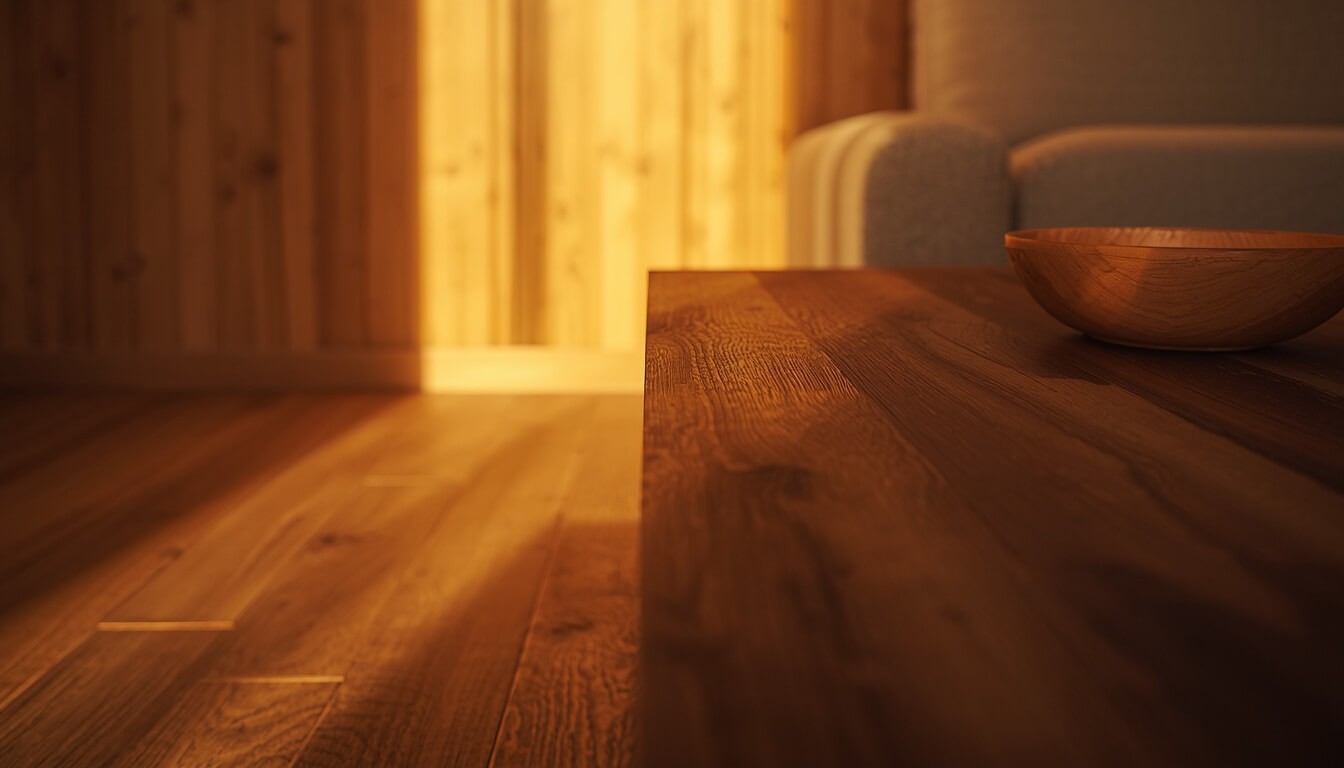
Timber sets the tone of a room before any furniture arrives. The floor, the shelving and the one good table all read as a single material, so choosing the wood is really choosing the mood.
We keep coming back to three: oak, walnut and ash. Each behaves differently in light, and each suits a different kind of room.
Oak: the dependable one
Oak sits in the middle of the range, a soft honey with a visible, open grain. It's hard-wearing and forgiving, and it takes oil finishes well.
We use it where a room needs warmth without drama: hallways, family kitchens, floors that will see daily life. It pairs with almost everything, which is its strength and its only weakness.
Walnut: the deep one
Walnut is dark, smooth and quiet, with a fine grain that reads almost like leather. It absorbs light instead of bouncing it, so it needs a bright room or it turns heavy.
We reserve it for focus points: a dining table, a sideboard, a run of joinery. A little walnut does more than a lot of it.
Ash: the light one
Ash is the palest of the three, creamy and straight-grained, with a strength close to oak. It brings brightness into small or north-facing rooms and suits Japandi and Minimalist schemes well.
It shows wear a little more honestly than oak, which we think is part of its appeal.
How we decide
Three questions settle most choices:
How much natural light does the room get? Less light, lighter wood.
How much wear will it take? High traffic goes to oak or ash.
Is it the main material or the accent? Accents can be darker. The main material should be calm.
Whatever you choose, sample it in the room itself. Timber looks different at 9am and at 5pm, and no catalogue photo will tell you that.
Recent News
[
01
]


Let's Create
[
02
]